

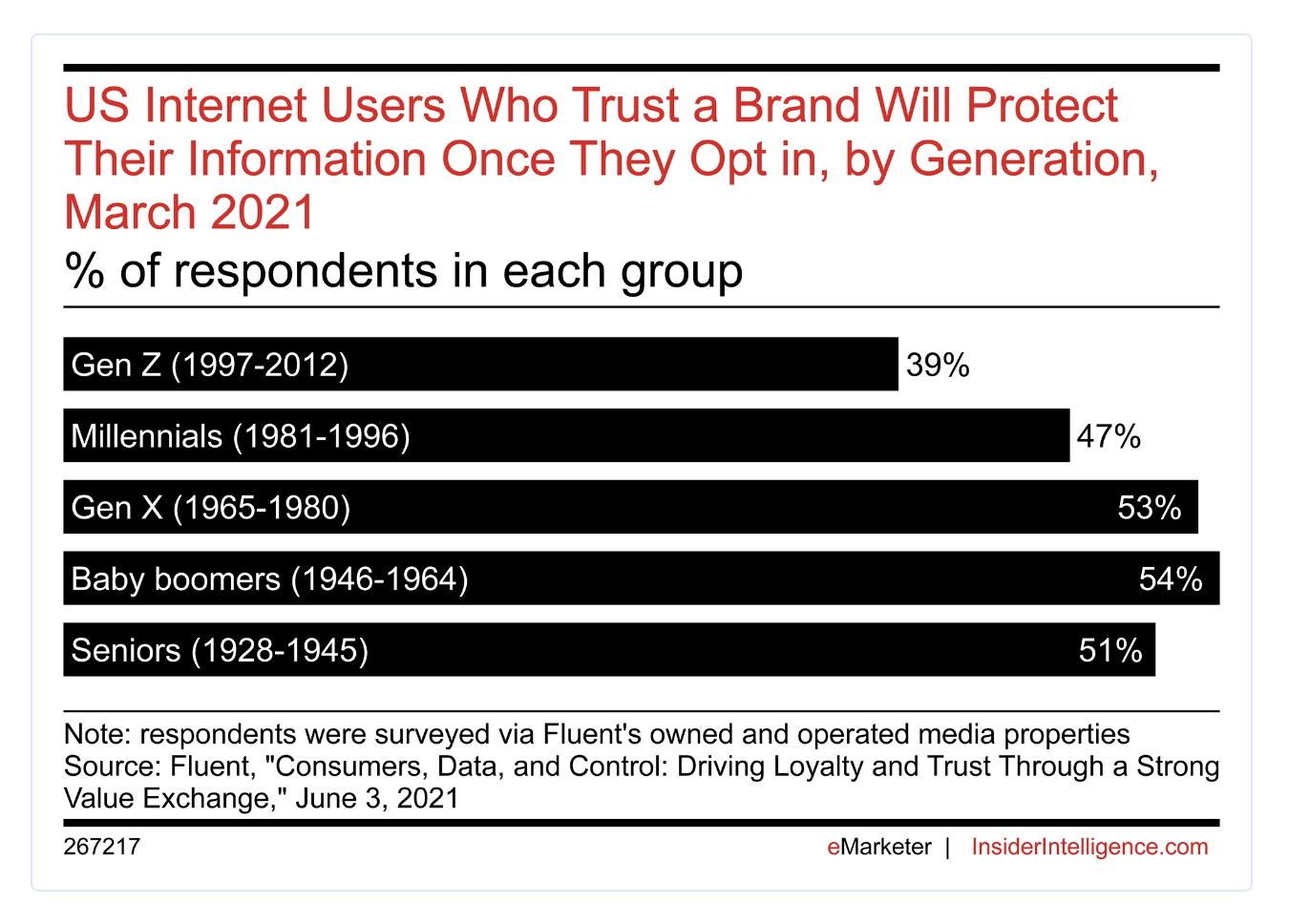
As the digital sphere evolves, so do the demographics, with Gen Z and millennials shining as an increasingly prominent consumer group. Recognizing their preferences and catering to their requirements is becoming an essential strategy, profoundly impacting the lifespan of businesses.
Regardless of your business’s geographical focus, be it the United States, the MENA region, or elsewhere, meeting the demands of this user base has become indispensable for any enterprise aiming to thrive in 2024.
Several vital elements, such as your organization’s credibility and reputation, handling customer data and privacy, and the amount of transparency and trust it exudes, play significant roles in the competitive market battlefield. Hence, concepts such as consent management and Consent Management Platforms (CMPs) emerged.
What traits do Gen Z and millennials exhibit in the marketplace, and how can companies adjust their strategies as these generations gain purchasing power? How does a CMP work, and what exactly is it? What purpose do regulations like the EU’s GDPR or California’s CCPA serve, and how can businesses leverage CMPs? This blog will discuss and investigate these numerous topics and questions.
Understanding the Data Behavior of Gen Z and Millennials
Comprising roughly 30% of the global populace, Generation Z (born between 1997 and 2012) coexists with Millennials (taken between 1981 and 1996), who account for about 1.6 billion of the world’s citizens. These two digitally adept generations were raised in a tech-saturated environment, naturally adapting to navigating the online world. Yet, their perspectives on data privacy and consent exhibit subtle variations.
Gen Z: The Judicious Guardians
Dubbed Pragmatic Protectors, Gen Z individuals have been observers of digital evolution since their infancy. As a result, they possess an acute awareness of their digital footprint. Widely reported data breaches and privacy scandals are partly attributed to the prominence of privacy and data security concerns within Gen Z. This generation is distinguished by its pragmatic stance on data disclosure, meticulously balancing the advantages and potential hazards of sharing information.
Millennials: The Forefront of Digital Advancements
Regarded as the digital era trailblazers, Millennials have quickly adopted and adapted to the internet since its inception. Their comfort with online data sharing is apparent, yet they exhibit a growing consciousness towards data privacy alongside this ease. Their actions often demonstrate a delicate equilibrium between their yearning for tailored experiences and their demand for transparency and authority over personal information.
Consent Management Platforms (CMPs)
Birth and Emergence
As corporations strive to understand the intricacies of data privacy while simultaneously meeting the needs of these two influential cohorts, the development and application of Consent Management Platforms (CMP) have become imperative. But what exactly does a CMP do?
A Consent Management Platform (CMP) is a digitally engineered tool intended to streamline, monitor, and handle user permissions for gathering and processing personal data. It offers individuals a detailed command over what data is collected, its application, and its purposes.
Understanding the Dynamics Behind a CMP
Knowing how CMPs work necessitates a deep investigation into their core operations. This exploration will illuminate how it expertly balances the crucial interplay of user privacy, data accumulation, and company compliance. These dynamics and mechanisms can be listed as follows:
- Empowering User Autonomy
CMPs afford users the option to make knowledgeable choices concerning their data. Rather than offering a simple “yes” or “no” option for all data collection, a CMP allows individuals to define the kind of data they can easily share and its intended uses. This level of precision is in tune with the expectations of Gen Z and Millennials, who appreciate transparency and customization.
- Legal Adherence
Businesses must pay attention to compliance in a time characterized by rigorous data protection rules such as GDPR and CCPA. Companies use CMP as a crucial tool to ensure they remain within these legislative bounds by gathering user consent in a lawful and straightforward manner. This approach reduces potential legal pitfalls, and fosters trust within the user community, particularly among the privacy-minded generations.
- Storing and Tracking Consent
Upon receiving the consent preferences from users, the CMP functions responsibly by securely storing and tracking these selections. This information forms a detailed log of each user’s consent history, fulfilling data protection regulations and demonstrating the company’s dedication to transparency and accountability. Companies leveraging a CMP can confidently showcase their commitment in case of any inquiries from regulatory bodies regarding data practices.
- Integration with Digital Ecosystems
CMPs offer design banner templates that blend with any website, mobile application, and other online platform. This integration guarantees that obtaining consent does not obstruct the user experience. Whether users navigate a website, sign into a mobile app, or utilize an online service, the CMP operates unobtrusively, aligning data consent with the organic progression of user engagement.
6 Benefits of Consent Management Platforms in Today’s Dynamic Landscape
While the data-driven economy presents opportunities for innovation and personalization, it also raises many ethical considerations and data misusages. Striking the right balance between leveraging data for business advantage and respecting user privacy is delicate.
Companies that prioritize ethical data practices embrace transparency and put user consent at the forefront, complying with regulations and contributing to a positive and sustainable digital ecosystem.
On the other hand, Millennials and Gen Z’s shifting needs and expectations challenge businesses today, making a Consent Management Platform (CMP) an essential investment that yields many advantages in this modern era.
Moreover, the wealth of data collected through this platform can provide insights into customer behavior and preferences, enabling effective data-driven strategies and business growth.
- Personalized Experience Optimization
Implementing personalization is critical in contemporary marketing initiatives, requiring careful execution. Businesses can tailor user experiences based on explicit agreement through CMP, ensuring they see personalization initiatives as value-adding rather than invasive. This focused strategy bolsters the impact of marketing campaigns while respecting user privacy.
- Proactive Risk Management
The legislative environment related to data security is constantly in flux, with severe penalties for those failing to comply. A CMP provides a structured method for obtaining and overseeing user consent, thereby minimizing the potential for legal implications. By staying abreast of regulatory shifts, companies can adjust their data-handling protocols in real time, ensuring persistent conformity with the law.
- Boosting Customer Confidence and Fostering Loyalty
Establishing trust in the era of digitalization is a complex task. A CMP nurtures faith among consumers by emphasizing clarity and user sovereignty. When individuals perceive that they have control over their data, they are more inclined to interact with a brand, opt in, and become loyal customers. This aspect is especially significant for Gen Z and Millennials, who remap the schemes and put great importance on sincerity and ethical business conduct.
- Adaptability to Evolving Consumer Expectations
Consumer expectations around data privacy are dynamic and subject to change. A CMP provides the flexibility and adaptability needed to align with evolving expectations. By staying attuned to user preferences and adjusting data practices accordingly, companies can maintain a positive relationship with their audience over the long term.
- Gaining an Edge in the Digital Marketplace
Businesses that put user privacy and data consent at the forefront in the congested digital environment gain a competitive advantage. Gen Z and Millennials, discerning consumer groups, actively pursue companies whose principles resonate with their own. A robust CMP satisfies these demands and establishes a business as a principled and ethical competitor in the marketplace.
- Data Protection and Security
The role of CMPs in solid data governance is pivotal as they ensure the utilization of gathered data strictly for predetermined purposes and within set boundaries. This practice not only protects user data but also strengthens comprehensive cybersecurity. By maintaining rigid data handling procedures, enterprises can reduce the threat of data leaks and unauthorized entry.
Enhance Your Data Confidentiality Plan!
As an entrepreneur, a dependable and all-encompassing Consent Management Platform is imperative. OneTrust emerges as a standard of superiority, providing compliance solutions and a complete data privacy methodology.
What Is OneTrust?
OneTrust is a leading provider of B2B solutions in security, data governance, and internet privacy compliance. Established in 2016 in Georgia, the company has rapidly ascended to a prominent position within its industry. Their flagship offering is the Trust Intelligence Platform, a comprehensive tool designed to help businesses of all scales successfully navigate the ever-changing terrain of data regulation and compliance.
The platform equips publishers with functionalities spanning data identification and categorization to cookie consent and user access management, empowering them to foster customer and stakeholder trust through responsible and ethical data usage.
Robust features integrated into the platform support this commitment. These include managing privacy and security compliance obligations, identifying and categorizing data, reducing data collection and retention, obtaining individual consent, addressing data subject requests, executing privacy impact assessments, and overseeing and auditing their privacy and security programs.
Opt for the Intelligent Decision!
Fortify your business with clarity, consumer trust, and adherence to regulations. Progress towards data privacy with
Frequently Asked QuestionWhat are the key data privacy traits of Gen Z and Millennials in the marketplace?
Gen Z, known as Pragmatic Protectors, is highly aware of its digital footprint and carefully weighs the benefits and risks of sharing personal data, expressing strong concerns about privacy given frequent data breaches. Millennials, digital era pioneers, are comfortable sharing data online but increasingly value transparency and control over their information, seeking a balance between personalized experiences and data privacy.
What is a Consent Management Platform (CMP) and why is it important for businesses?
A Consent Management Platform (CMP) is a digital tool designed to manage, track, and streamline user permissions for collecting and processing personal data. It empowers users to control what data is shared and how it’s used, helping businesses comply with data privacy laws like GDPR and CCPA, build trust with customers, and avoid legal risks.
How do Consent Management Platforms (CMPs) enhance user control over personal data?
CMPs allow users to make precise choices about their data sharing preferences instead of a simple yes/no option. Users can select which types of data can be collected and specify its intended use, aligning with Gen Z and Millennials’ demand for transparency and customization in digital interactions.
How do CMPs help companies comply with regulations such as GDPR and CCPA?
CMPs ensure companies obtain lawful and clear consent from users before collecting data, securely store consent records, and provide detailed logs of user preferences. This helps businesses stay compliant with evolving regulations, reduce legal risks, and demonstrate accountability to regulatory bodies.
What are the top benefits of implementing a Consent Management Platform for businesses today?
Key benefits include: optimizing personalized user experiences based on explicit consent; proactively managing legal risks by adhering to data laws; boosting customer trust and loyalty by promoting transparency; adapting to changing consumer privacy expectations; gaining competitive advantage by respecting user privacy; and strengthening data protection and security.
How does using a CMP improve customer trust and loyalty among Gen Z and Millennials?
CMPs foster trust by giving users clear control over their data and emphasizing transparency. When Gen Z and Millennials feel empowered over their personal information, they are more likely to engage with brands positively, opt into marketing efforts, and develop long-term loyalty due to perceived ethical business practices.
Why is adaptability important in Consent Management Platforms for evolving consumer expectations?
Consumer attitudes toward data privacy are constantly changing. CMPs provide the flexibility to update consent mechanisms and data handling practices in real time, ensuring businesses remain aligned with user preferences and maintain positive relationships with their audiences.
How do CMPs integrate with digital platforms without disrupting user experience?
CMPs offer customizable banner templates that seamlessly blend into websites, mobile apps, and other online platforms. This ensures that obtaining consent is unobtrusive and natural within the user journey, providing a smooth experience while respecting privacy requirements.
What role does OneTrust play in consent management and data privacy compliance?
OneTrust is a leading provider of compliance solutions and comprehensive data privacy management tools. Their Trust Intelligence Platform helps businesses identify and categorize data, obtain consent, manage privacy requests, conduct impact assessments, and maintain security programs, all of which are critical for ethical data use and regulatory adherence.
How can businesses leverage insights from CMPs for growth?
The data collected through CMPs not only ensures compliance but also offers valuable insights into customer behavior and preferences. Businesses can use this information to design targeted marketing strategies that respect user privacy while driving effective personalization and growth.


