


In today’s fast-paced and increasingly digital world, organizations across all sectors are looking to harness the power of digital technologies to increase efficiency, deliver superior customer experiences, drive growth, and stay competitive.
However, the path to a successful digital transformation is not always straightforward and is fraught with challenges. This is why businesses need to approach digital transformation strategically, understanding its keys to success instead of rushing headlong into new digital projects.
A successful digital transformation refers to the process of leveraging digital technologies to fundamentally improve or change how businesses operate and deliver value to their customers. It involves radically rethinking how an organization uses technology, people, and processes to change business performance drastically.
This transformative process is not merely a matter of implementing new technological solutions – it requires a holistic approach, encompassing changes in organization culture, leadership, skills, and business models.
In essence, a successful digital transformation journey goes far beyond the confines of technology. It starts with leadership that can envision the future, a well-defined and communicated digital strategy, an adaptable company culture, robust data analytics, and a relentless focus on customer experience. A well-orchestrated orchestration of these components proves vital in securing the success of the transformation journey.
What Are The 5 Keys to a Successful Digital Transformation?
To ensure your digital transformation is a success, follow these 5 key steps.
1) Strategic Alignment
Align your digital transformation initiative to your business objectives and the specific end goals you need and want to achieve.
Alignment requires having a clear understanding of the areas of the business you intend to impact through transformational change, such as:
- Customer Experience: Web & App
- Customer Engagement: Loyalty & Retention
- Data Orchestration
- Media Activation
- Measurement
- Commerce
- Service & Support
During this step, you tie your strategy into specific use cases to support your various business functions. This will ensure your strategic vision is actionable, impactful, and reflects your delivery teams’ real-world needs.
2) Current State Assessment
Where do you stand today in terms of digital transformation? Think about digital transformation from the perspective of four key pillars:
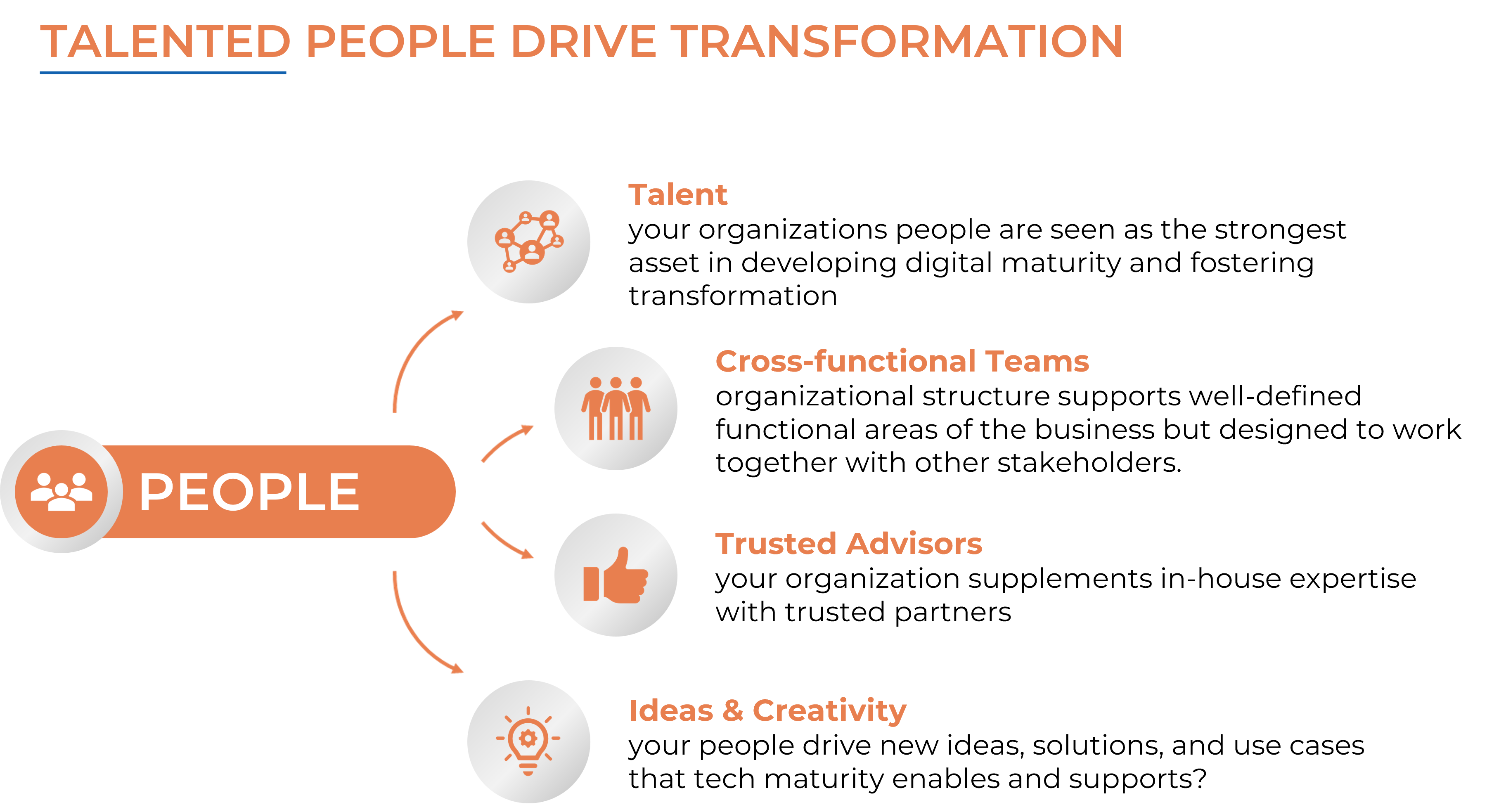
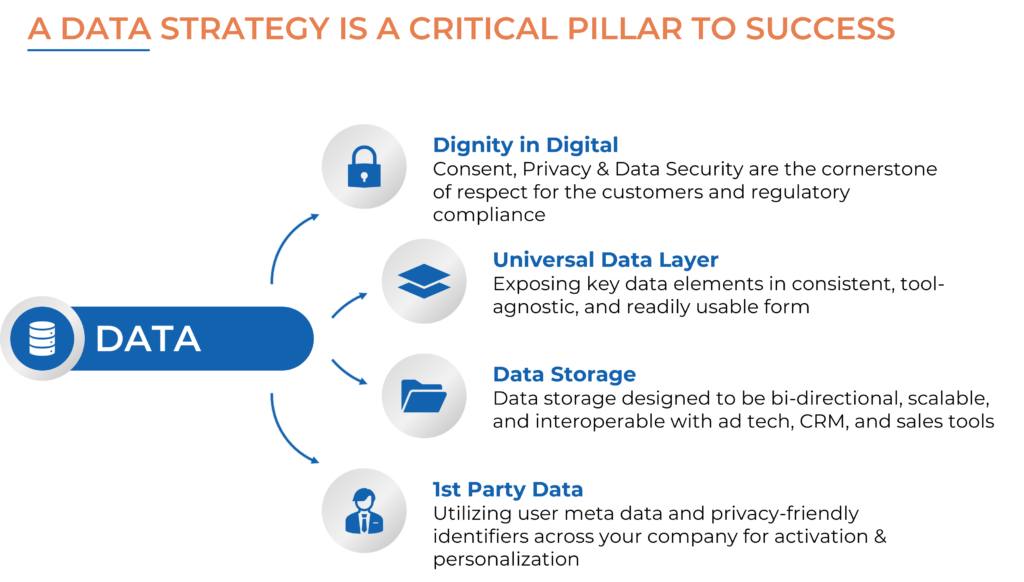
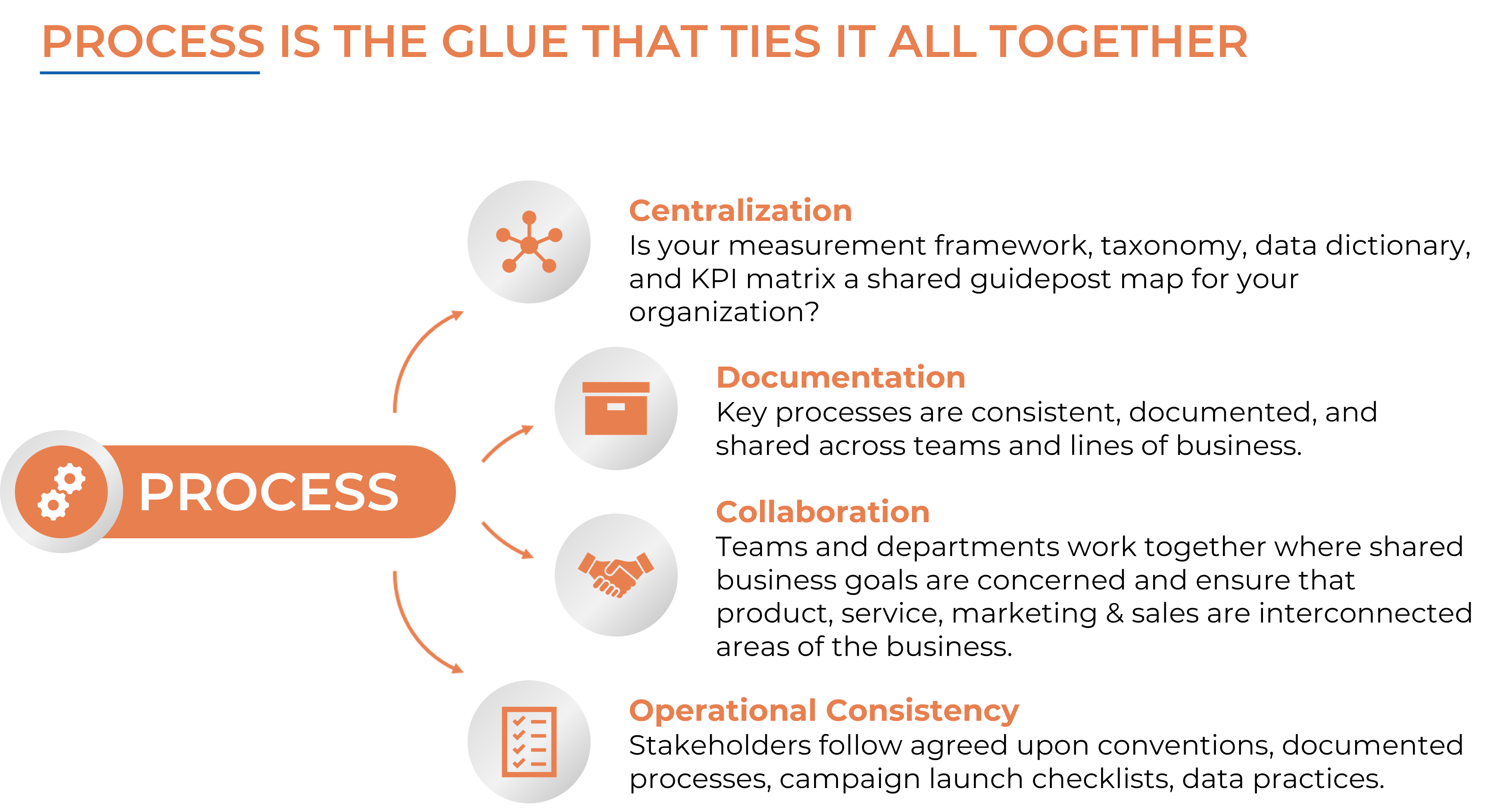
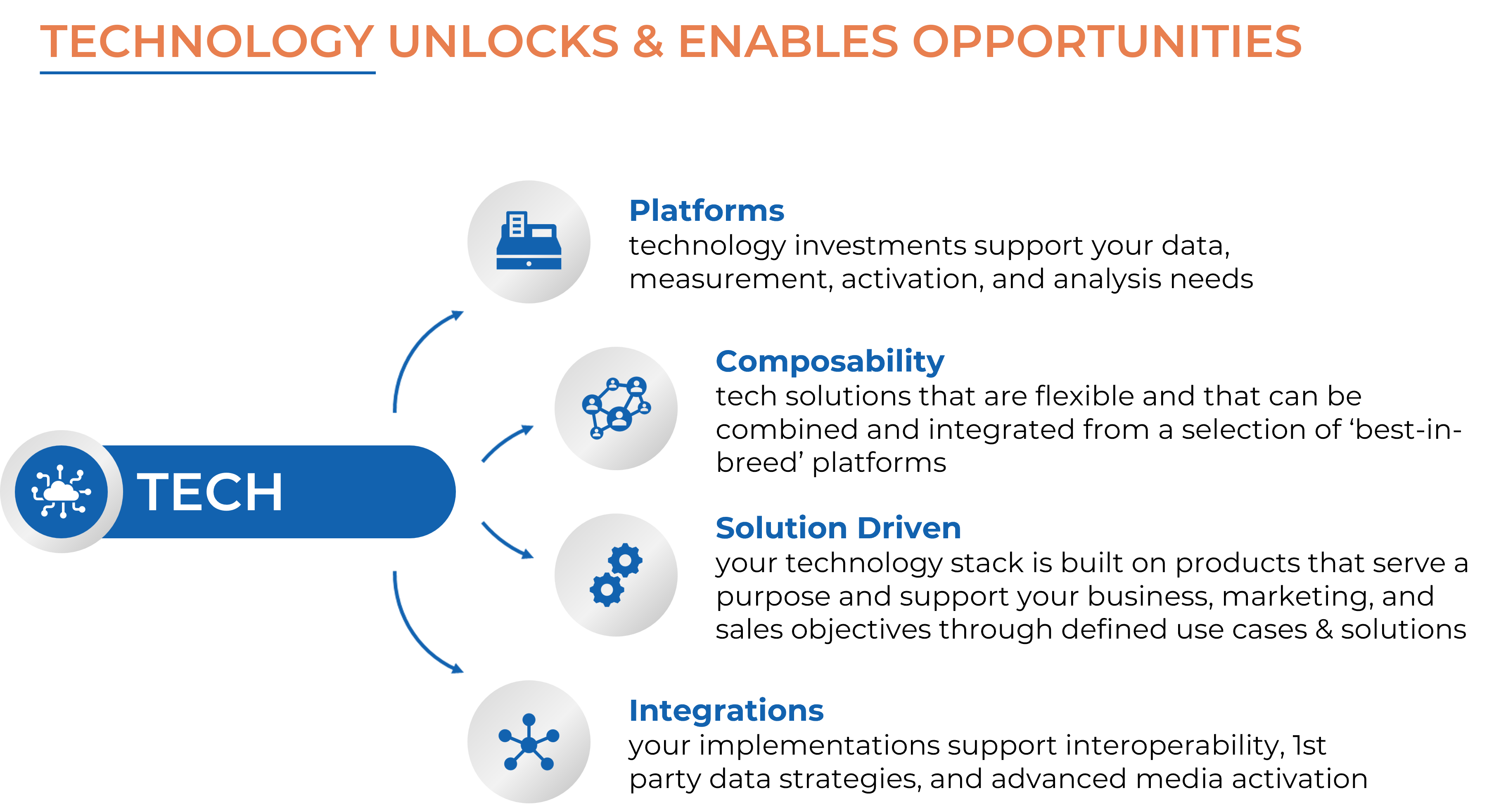
Digital maturity is an outcome of the combined state of each pillar and how they interact holistically to help you deliver seamless, connected digital experiences for your customers and prospects. An amazing technology stack is great, but if it is not fully integrated, utilizing clean data, supported by efficient and effective processes, and driven by skilled people developing the advanced use cases that allow tech to shine, then something is missing.
A current state assessment gives you a shared, clear-eyed starting point of where to make achievable and impactful changes. It also helps to prioritize where you must focus most to bring your digital transformation to life. Sometimes, people mistake buying technology for digital maturity, but simply investing in more tech is rarely transformative. That said, your organization may benefit from several technology enablement and tech maturity projects to help better integrate your advertising technology with your centralized data infrastructure, for example. And it may very well turn out that you are missing a key piece of technology to achieve the integrated, multi-moment journey orchestration you seek. You may also have all the tech you need, and the real magic will only come when you support it with integrated processes, a robust 1st-party data strategy, and the combination of skills & expertise to execute fully.

3) Develop a Transformation Guidebook
A guidebook is the culmination of your strategic vision combined with a thorough current state assessment to develop a detailed action plan for making your digital transformation vision a reality. A Transformation Guidebook combines the strategic use cases with your current digital maturity state. It distills your ideal outcomes into actionable, tactical projects, allowing you to execute your transformation successfully. The guidebook is built around the pillars of digital maturity and is closely aligned with the strategic needs of your organization:
- Technology Projects & Technology Investments
- Training, Upskilling & Professional Development
- Process Improvements and Centralized Documentation (measurement framework, taxonomies, etc.)
- Data Orchestration, Integration & Data Quality Management
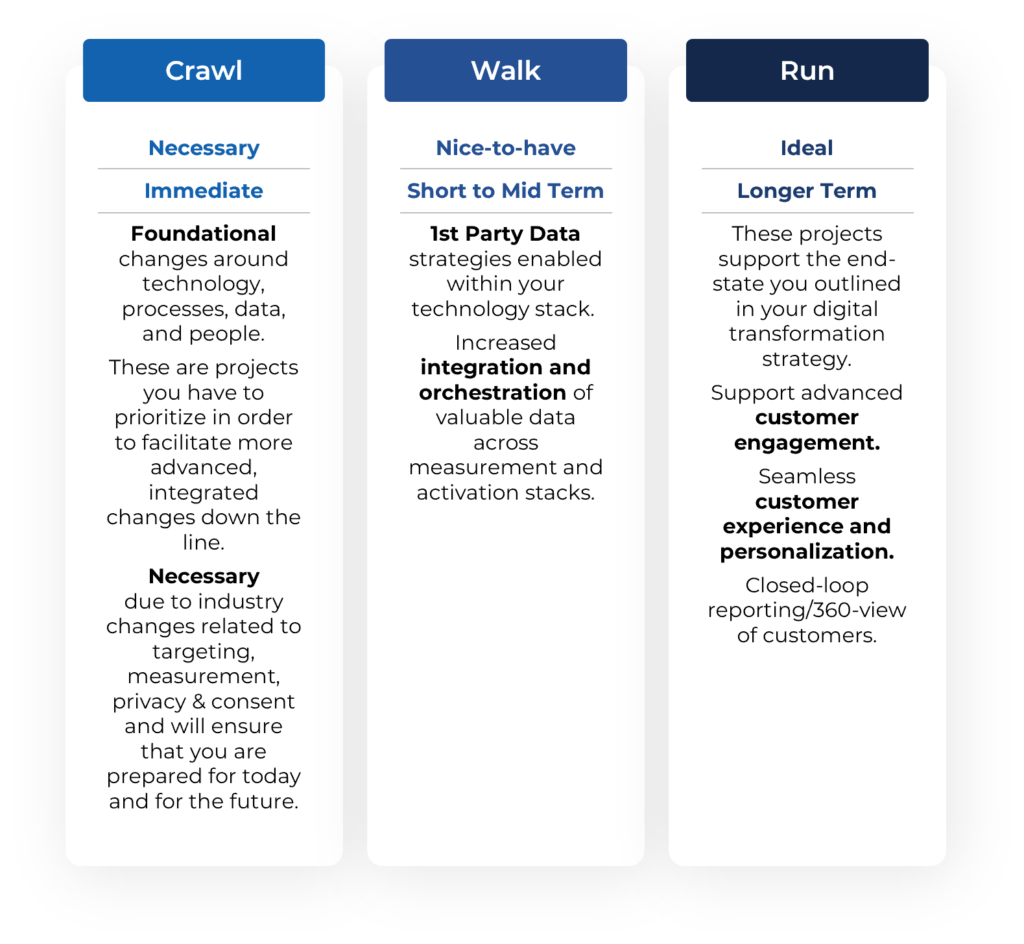
Organize your guidebook or roadmap to expedite your business benefits and ROI from a digital transformation initiative:
4) Execute & Iterate
It’s time to execute your plan or guidebook. This is not a one-and-done endeavor. It is an iterative process of continuous improvement.
Follow your plan and begin executing the projects to enhance your company’s digital maturity and align it with your specific needs.
But be agile and able to change directions to refine and optimize along the way.
5) Work With a Trusted Partner
A trusted advisor can be an essential extension of your team to help ensure the success of your ongoing digital transformation.
Again, it’s a process, and industry veterans with experience and expertise can help you avoid pitfalls and mistakes while executing your strategy and roadmap more efficiently and effectively.
We have proven ways of working that help our clients succeed.
Let’s start with a conversation and see how we can work together.
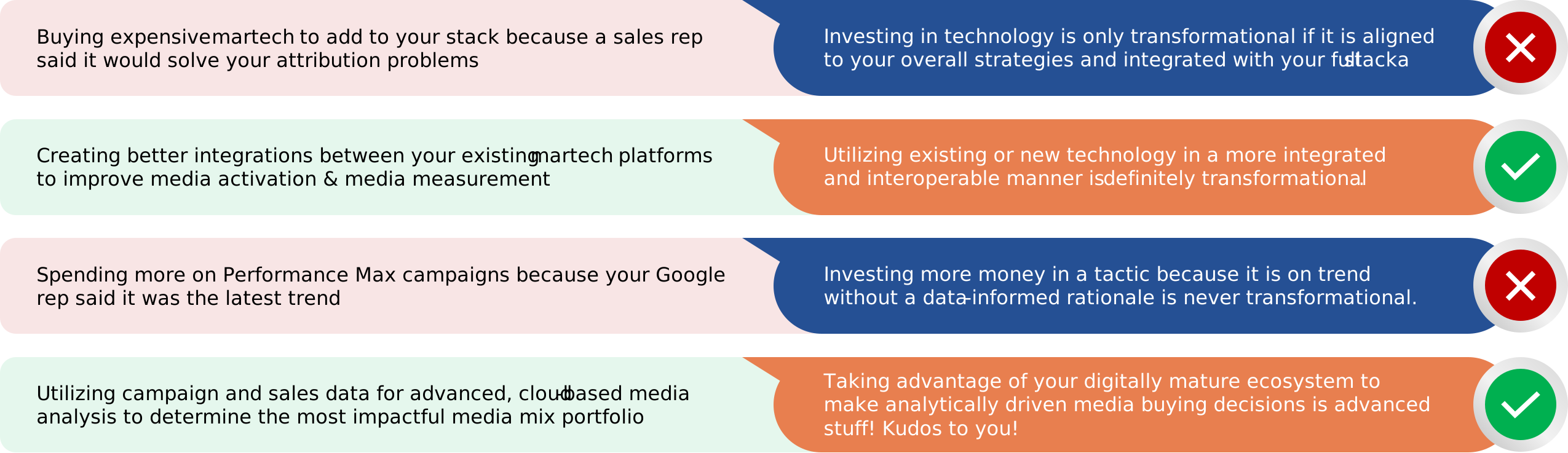
Transformational or not?

Looking to embark on a digital transformation journey?
Look no further than e-CENS! Our team of experts is here to guide you through the process and help you unlock the full potential of your business.
With our trusted advisory and data management services, we’ll ensure that your digital transformation leads to competitive advantage and successful outcomes.
Contact us today to learn more about how we can assist you in achieving your digital transformation goals.
Frequently Asked QuestionWhat is digital transformation, and why is it essential for businesses today?
Digital transformation is the process of leveraging digital technologies to fundamentally improve or change how businesses operate and deliver value to customers. It involves rethinking technology, people, and processes to enhance business performance significantly. This is important as it helps organizations increase efficiency, deliver superior customer experiences, drive growth, and stay competitive in a fast-paced digital world.
What are the key components required for a successful digital transformation?
A successful digital transformation requires leadership with a clear vision, a well-defined digital strategy, an adaptable company culture, robust data analytics, and a strong focus on customer experience. It goes beyond technology implementation and includes changes in culture, skills, business models, and processes.
How does strategic alignment contribute to digital transformation success?
Strategic alignment ensures the digital transformation initiative directly supports business objectives and specific goals, including improving customer experience, engagement, data orchestration, media activation, measurement, commerce, and service. It makes the transformation actionable and impactful by linking strategy to real-world use cases.
Why is assessing your current state essential before starting digital transformation?
Assessing the current state provides a clear understanding of your organization’s digital maturity across four key pillars (technology, data, processes, and people). It identifies gaps and priorities, preventing the mistake of equating technology purchase with true digital maturity and helping focus efforts on what will deliver seamless, connected customer experiences.
What is a Transformation Guidebook, and what role does it play?
A Transformation Guidebook combines your strategic vision with the current state assessment to create a detailed action plan. It translates ideal outcomes into tactical projects across technology investments, training, process improvements, data management, and more. This guidebook serves as a roadmap to successfully execute and manage your digital transformation.
Why is iteration important during the execution of digital transformation?
Digital transformation is an ongoing process that requires continuous improvement. Executing your plan while staying agile enables you to refine and optimize projects based on feedback and results, ensuring your digital maturity evolves to meet changing business needs effectively.
How can working with a trusted partner benefit your digital transformation journey?
A trusted advisor brings experience and expertise that help avoid common pitfalls, accelerate execution, and improve efficiency. They act as an extension of your team, providing proven methods and guidance to ensure successful outcomes throughout the transformation process.
What are common misconceptions about digital maturity in the context of transformation?
A common misconception is that buying new technology alone achieves digital maturity. True maturity depends on integration of technology with clean data, efficient processes, skilled people, and advanced use cases. Without this holistic approach, technology investments alone rarely lead to transformative change.
What business areas can benefit from digital transformation initiatives?
Digital transformation can impact various business areas, including customer experience (web & app), customer engagement (loyalty & retention), data orchestration, media activation, measurement frameworks, commerce operations, and service & support functions.
How does data orchestration contribute to successful digital transformation?
Data orchestration ensures integration, quality management, and effective use of first-party data across platforms. This enables organizations to deliver seamless multi-channel customer journeys and supports advanced analytics that drive better decision-making throughout the transformation.


